
Data-Driven Science and Engineering: Machine Learning, Dynamical Systems, and Control
Profs. S. L. Brunton and J. N. Kutz (University of Washington)
When applied to polymer simulations, data-driven approaches have shown to be powerful techniques that can be used to better understand the underlying dynamics of a system. This textbook is a great introduction to a number of useful techniques that can be used in conjunction with traditional polymer simulations.
As a bonus, Profs. Kutz and Brunton maintain great YouTube channels with many useful videos related to the topic. A few favorites:
The SANS Toolbox
Dr. Boualem Hammouda (NIST Center for Neutron Research)
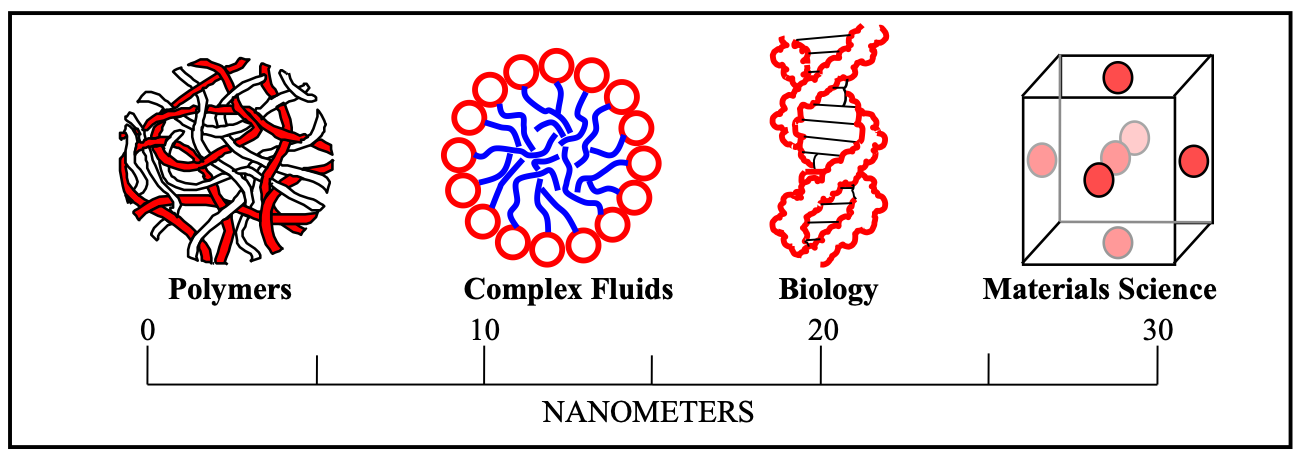
This comprehensive PDF contains detailed descriptions of neutron instrumentation, data reduction, analysis, and illustrative neutron scattering measurements focused exclusively on small-angle neutron scattering (SANS).
Theory of Polymer Dynamics
Prof. Johan Padding (Delft University of Technology)
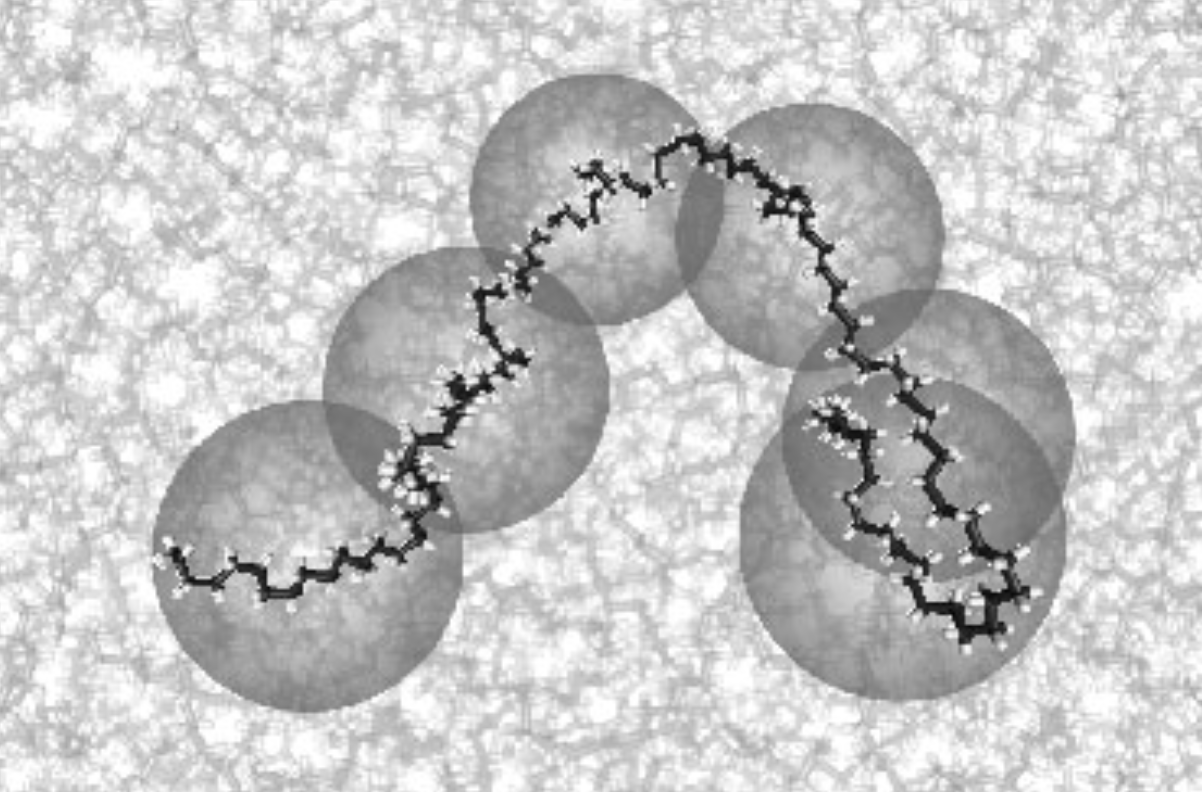
This short, four chapter book provides a great introduction to the fundamentals of polymer dynamics at a slightly more advanced level than many introductory textbooks, and is a great jumping off point for pursuing more advanced texts like Doi & Edwards.
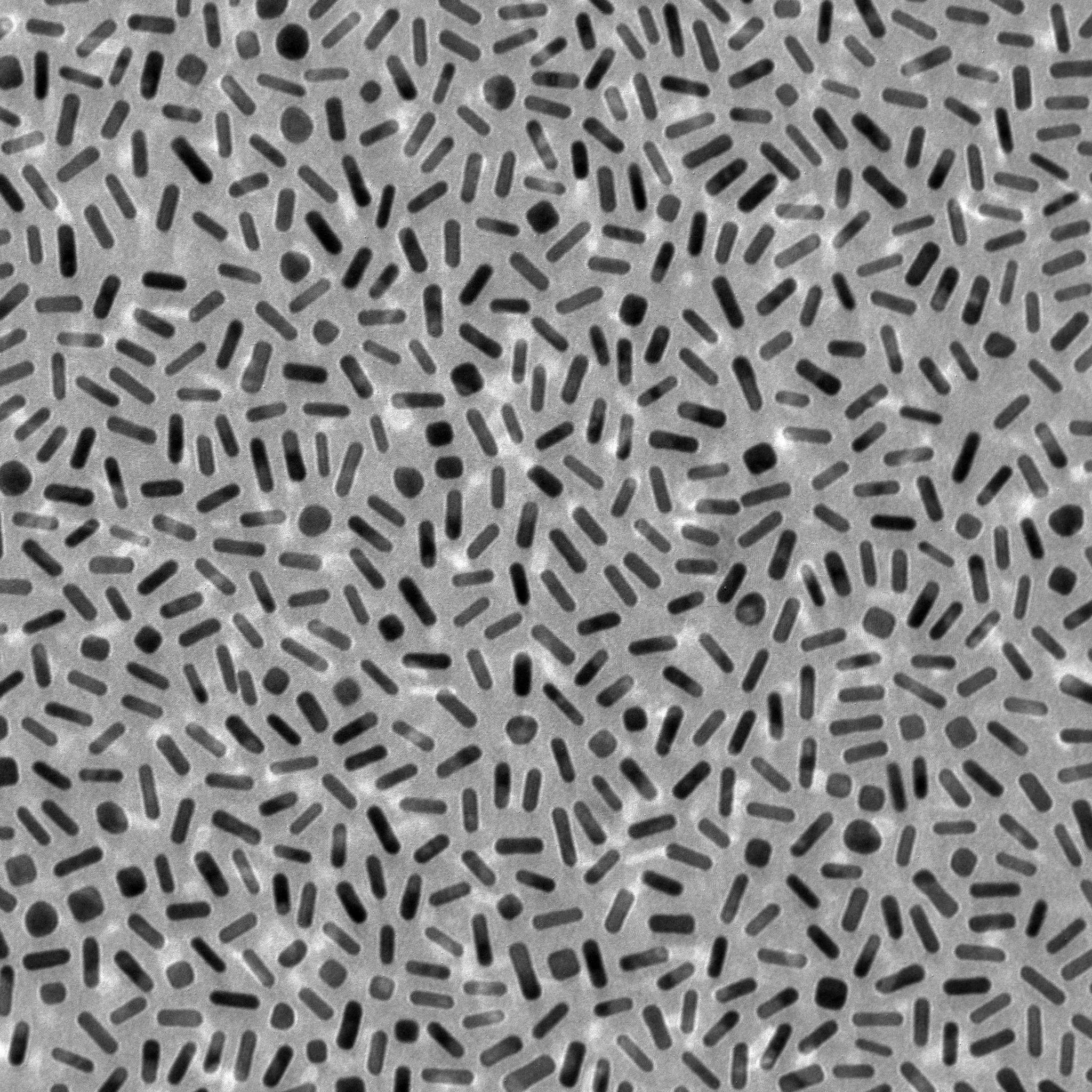
Ph.D. Dissertation, Polymer-Grafted Au Nanorods in Polymer Thin Films: Dispersion and Plasmonic Coupling
Prof. Michael J. A. Hore (University of Pennsylvania, 2012)
Ph.D. Advisor: Prof. Russell J. Composto
Prof. Hore’s Ph.D. dissertation combines experimental studies of Au nanorod dispersion in polymer thin films with self-consistent field theory (SCFT) calculations, Monte Carlo simulations, and Discrete Dipole Approximation (DDA) optical calculations.
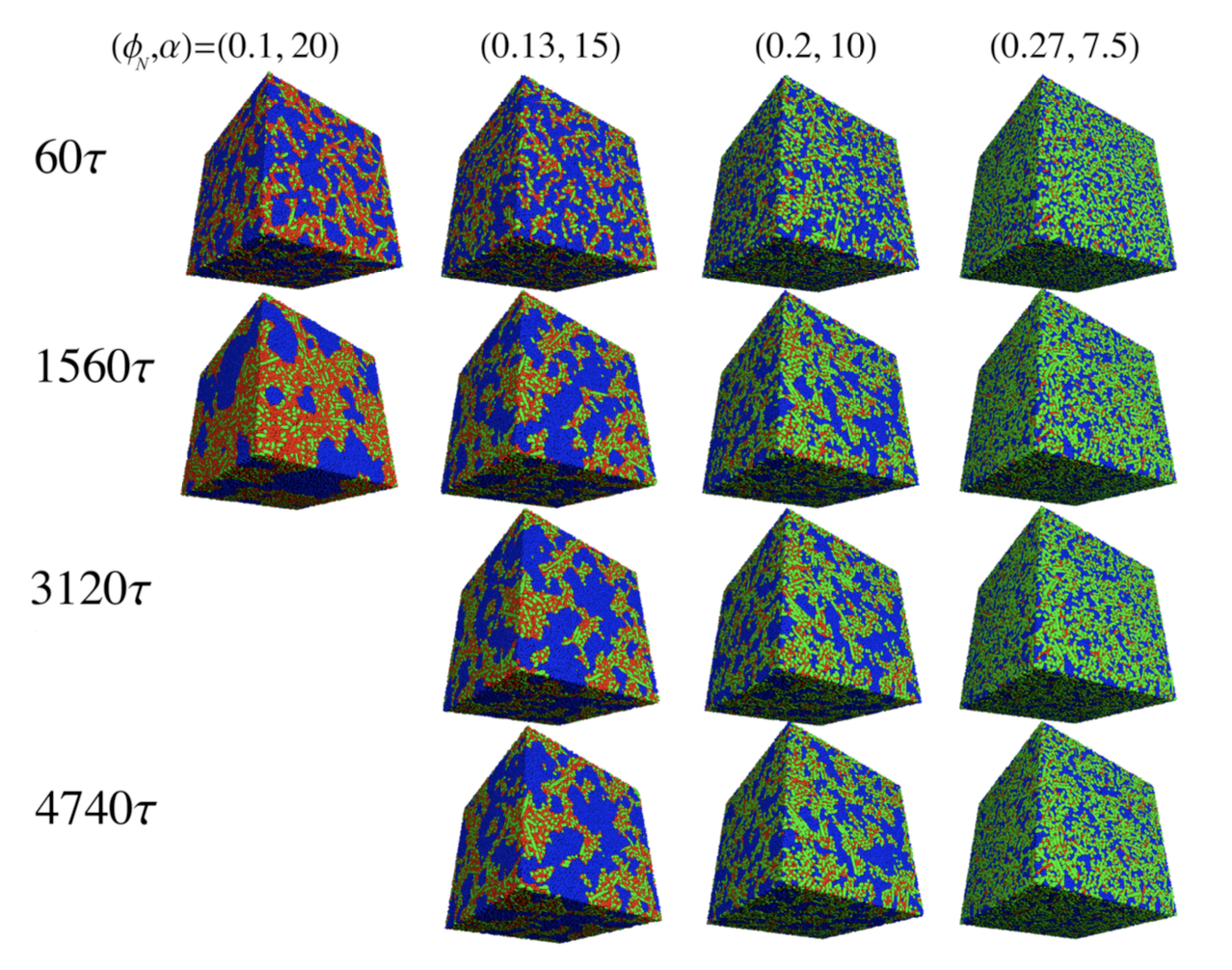
M. S. Thesis, The Phase Separation Dynamics and Morphology of Nanoparticle-Containing Immiscible Fluids
Prof. Michael J. A. Hore (The University of Memphis, 2007)
M.S. Advisor: Prof. Mohamed Laradji
Prof. Hore’s M.S. thesis used dissipative particle dynamics (DPD) simulations to understand the effect of nanoparticle shape and interaction strengths on the phase separation dynamics of immiscible fluids/polymer blends. The DPD code used in the thesis was written in Fortran 77, and had a full rigid-body dynamics description of the nanoparticle motions.